Trisul IPDR DoT Compliance Solution Use Cases
Simplify IPDR compliance and subscriber investigations across ISP networks.
Trisul IPDR helps ISPs collect IPDR records, identify subscribers from IP addresses, correlate NAT logs, investigate historical activity, and generate DoT-compliant reports from a single platform.
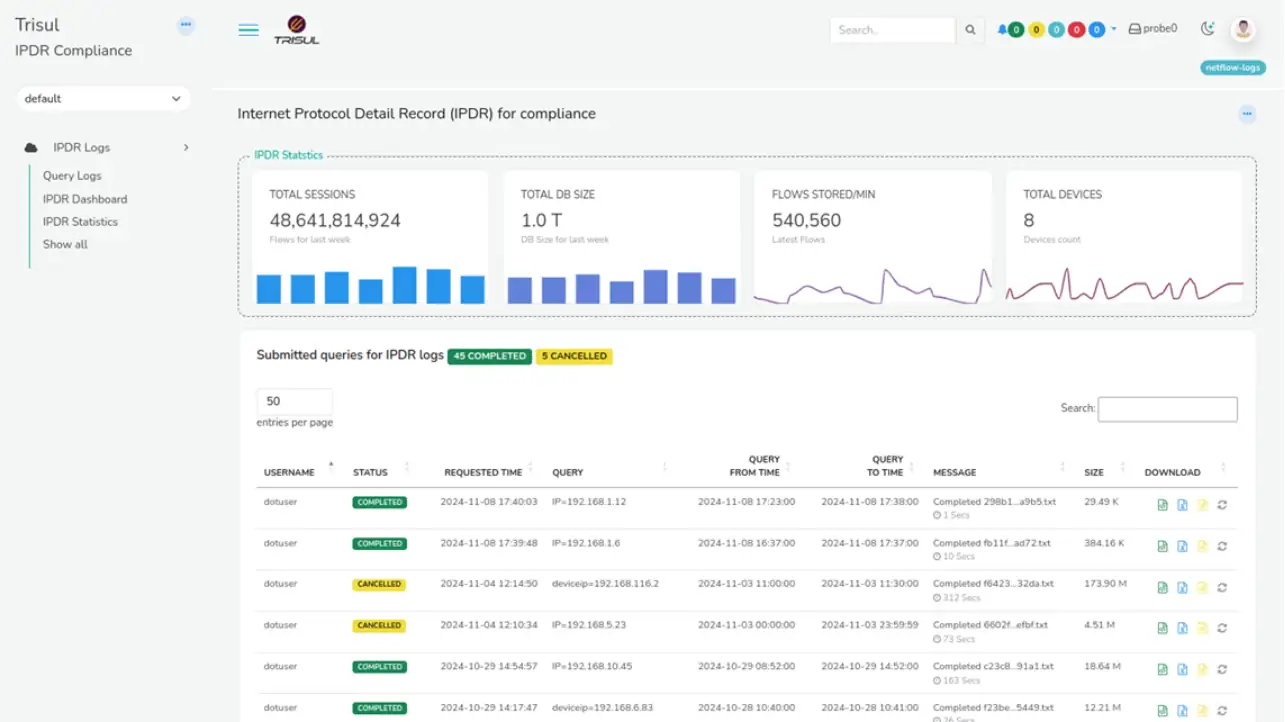
Subscriber Lookup & Investigations
How can an ISP identify the subscriber behind an IP address?
Identifying the subscriber behind an IP address requires correlating IPDR records, NAT translations, and subscriber authentication data across the network. Trisul IPDR enables ISPs to search historical records and accurately identify subscribers by correlating IPDR flows, NAT logs, and AAA records from a unified compliance platform.
- Search historical IPDR records by IP, timestamp, and port
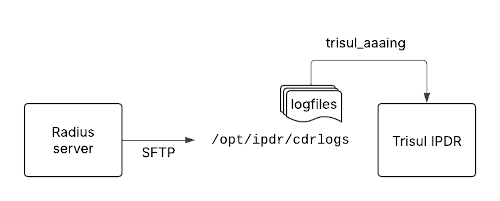
- Correlate NAT Syslog with AAA / RADIUS records
- Export results in DoT-compliant formats
Benefit: Reduce investigation time, identify subscribers accurately in CGNAT environments, and respond to LEA requests faster with complete audit trails.
Bulk IP Investigations
How can ISPs search multiple IP addresses at once?
Investigating multiple IP addresses requires searching large volumes of historical IPDR records quickly and efficiently. Trisul IPDR allows ISPs to perform bulk IP investigations, execute parallel searches, and generate reports for multiple IP addresses from a single interface.
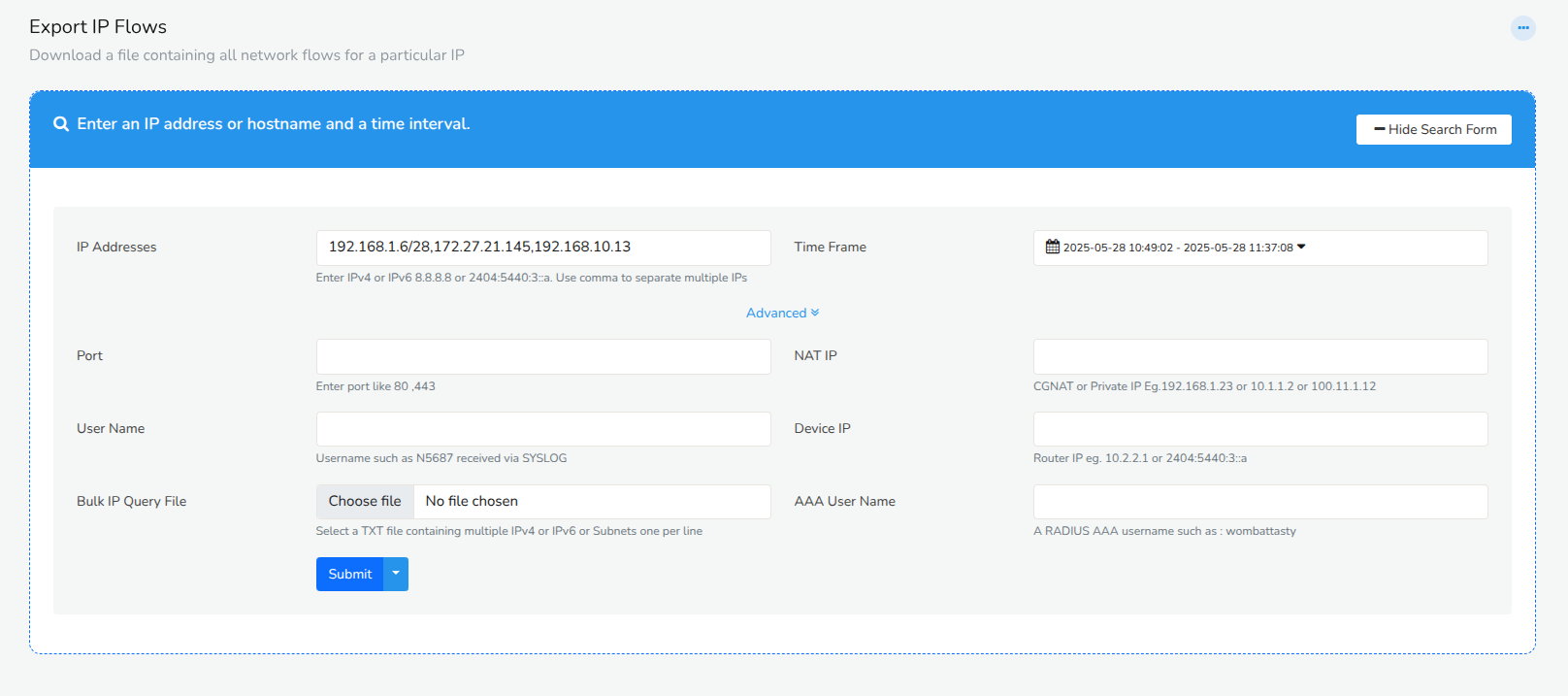
- Upload and search multiple IP addresses simultaneously
- Execute parallel search jobs
- Generate bulk reports in DoT-compliant formats
Benefit: Investigate thousands of IP addresses efficiently, reduce manual effort, and improve turnaround times for compliance and abuse investigations.
CGNAT & NAT Log Correlation
How do ISPs correlate NAT logs with subscriber identities?
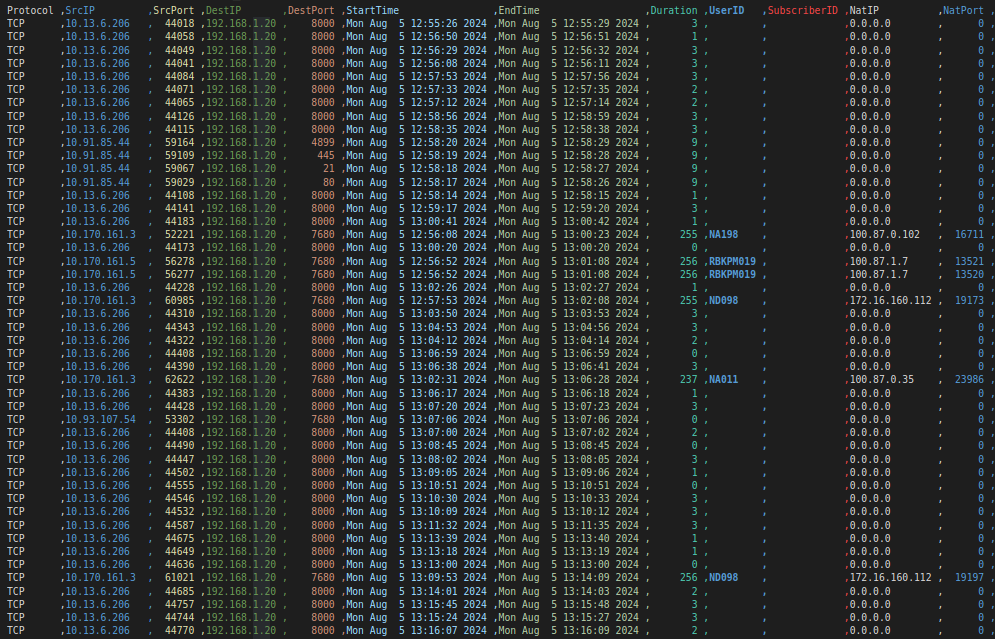
Correlating NAT logs with subscriber identities requires linking NAT translations, IPDR records, and authentication logs to reconstruct subscriber activity. Trisul IPDR correlates NAT Syslog, IPDR flows, and AAA records to help ISPs identify subscribers accurately in CGNAT environments.
- Ingest NAT Syslog and IPDR flow records
- Correlate NAT translations with subscriber identities
- Search historical NAT and subscriber activity
Benefit: Simplify NAT investigations, improve subscriber identification accuracy, and accelerate investigations across CGNAT deployments.
Audit Subscriber Activity & DoT-Compliant Reporting
How can ISPs audit subscriber activity and generate DoT-compliant reports?
ISPs need to investigate historical subscriber activity for regulatory audits, Law Enforcement Agency (LEA) requests, abuse investigations, and internal compliance reviews. This requires searching IPDR records, correlating subscriber information, and generating reports in formats prescribed by the Department of Telecommunications (DoT).
Trisul IPDR enables operators to audit subscriber activity by searching historical IPDR, NAT, and AAA records from a single interface. The platform automatically generates reports in DoT-compliant formats, allowing ISPs to respond quickly to audits and compliance requests while maintaining a complete record of investigations.
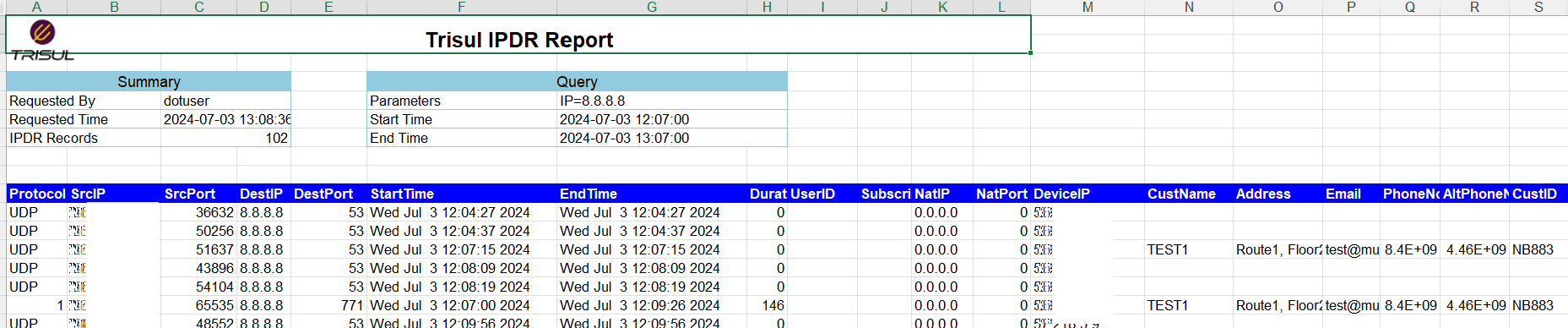
- Generate reports in DoT-prescribed formats
- Export results as Excel files
- Transfer reports securely through SFTP
Benefit: Automate regulatory reporting, reduce manual report preparation, and generate accurate DoT-compliant IPDR reports quickly.
Multi-Vendor IPDR Collection
How do ISPs collect IPDR logs from Cisco, Juniper, and CGNAT devices?
Collecting IPDR logs across ISP networks requires ingesting flow records and logs from routers, CGNAT devices, and authentication systems from multiple vendors. Trisul IPDR collects and normalizes IPDR records from NetFlow, IPFIX, Syslog, NAT Syslog, and AAA sources into a unified compliance platform.
- Collect records from NetFlow, IPFIX, and Syslog sources
- Integrate NAT Syslog and AAA / RADIUS logs
- Normalize records from multiple vendors into a unified database
Benefit: Centralize IPDR collection across heterogeneous networks, simplify operations, and maintain a unified compliance platform.
IPDR DoT Compliance Frequently Asked Questions
What is an IPDR and why do ISPs need it?
An Internet Protocol Detail Record (IPDR) contains information about network activity such as source and destination IP addresses, ports, protocols, timestamps, and subscriber details. ISPs use IPDR records to comply with Department of Telecommunications (DoT) regulations, investigate abuse incidents, respond to Law Enforcement Agency (LEA) requests, and maintain historical records of subscriber activity.
Trisul IPDR collects, stores, and retrieves IPDR records from multiple sources including NetFlow, IPFIX, NAT Syslog, and AAA logs.
What are the DoT requirements for IPDR retention?
The Department of Telecommunications (DoT) requires ISPs to maintain IPDR records, NAT logs, and subscriber mappings for prescribed retention periods and provide information when requested by authorized agencies.
Trisul IPDR helps ISPs retain and retrieve historical records efficiently through compressed storage, indexed searches, and configurable retention policies.
Does Trisul IPDR require changes to my existing network infrastructure?
No.
Trisul IPDR is designed to integrate with existing ISP networks and can ingest records from routers, firewalls, CGNAT devices, and authentication systems without requiring infrastructure changes.
The platform supports NetFlow, IPFIX, Syslog, NAT Syslog, AAA, and raw packet sources.
Which network devices and log sources are supported?
Trisul IPDR can ingest records from a wide range of network devices and systems including:
- Routers exporting NetFlow
- Devices exporting IPFIX
- CGNAT devices generating NAT Syslog
- AAA and RADIUS servers
- Raw packet capture sources
This enables deployment in heterogeneous, multi-vendor ISP environments.
Can Trisul IPDR be deployed on-premises or in the cloud?
Yes.
Trisul IPDR supports on-premises deployments on customer infrastructure as well as cloud-based deployments.
ISPs can choose the deployment model that best suits their operational, security, and regulatory requirements.
How does Trisul IPDR store large volumes of IPDR data efficiently?
IPDR systems process millions of records every day, making storage efficiency a key consideration.
Trisul IPDR uses compressed storage and flow deduplication techniques to reduce storage requirements while maintaining fast search performance across historical datasets.
Is Trisul IPDR AI Assistant safe to use for compliance investigations?
Yes.
Trisul IPDR AI Assistant operates only at the workflow layer and does not have direct access to IPDR, NAT, or subscriber logs. It helps users navigate the platform and retrieve information through controlled queries while the underlying compliance data remains protected by Trisul’s existing access controls.
This allows ISPs to benefit from AI-assisted workflows without exposing sensitive compliance data.
Is Trisul IPDR future-ready if DoT compliance requirements change?
Yes.
Trisul IPDR is designed to evolve with changing regulatory and operational requirements. The platform supports multiple data sources including NetFlow, IPFIX, NAT Syslog, AAA, and raw packet capture, allowing new record types and workflows to be incorporated as requirements evolve.
Its modular architecture enables updates to report formats, search workflows, and data correlation logic without requiring a complete redesign of the deployment. This helps ISPs adapt to changing DoT guidelines while continuing to use their existing infrastructure and historical data.
Whether the changes involve new reporting formats, additional subscriber information, or evolving logging requirements, Trisul IPDR is built to grow alongside regulatory needs.